Real Women, Synthetic Images: How AI Is Changing Beauty Standards
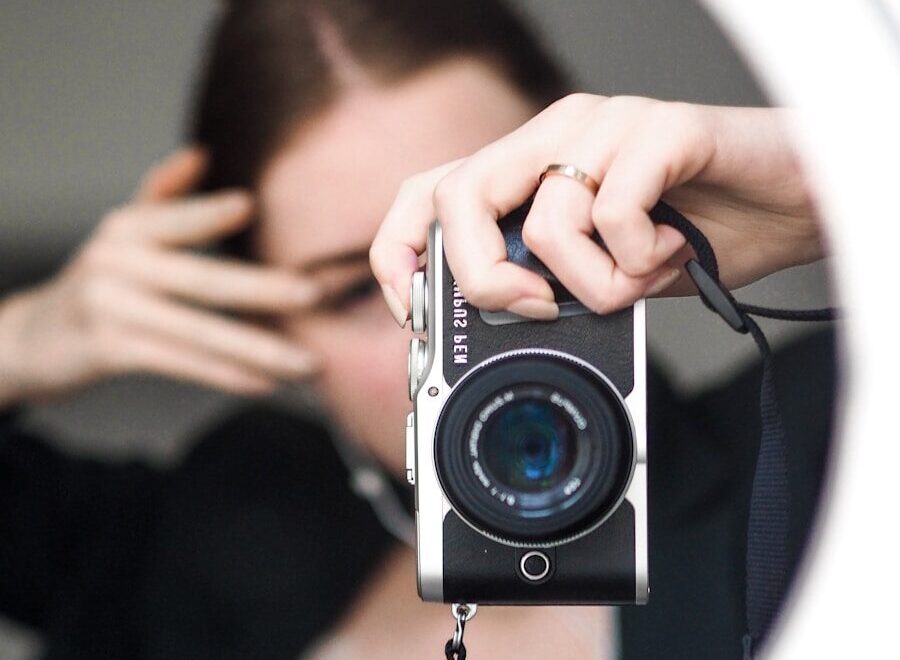
A woman looks directly into the camera. The light is soft, her expression calm, her skin textured enough to appear natural. She has a few visible lines around her eyes and a slight asymmetry in her smile. Nothing immediately suggests the portrait is artificial.
Yet the woman may never have existed.
Only a few years ago, the obvious question was whether a photograph had been retouched. Today, the face, body, clothing, lighting and even the location may have been generated without a camera, a photographer or a real person ever being present.
That distinction matters.
The concern is not simply that artificial images can deceive us. Images have always been staged, selected and manipulated. The deeper issue is that synthetic people are beginning to shape what real people are expected to look like.
From retouched photographs to people who never existed
Traditional photography begins with something that happened.
A person stood in front of a camera. Light fell across her face. She reacted, smiled, hesitated or changed her posture. A photographer made decisions about framing, timing and composition. However polished the final image became, it started with a real encounter.
Retouching could alter that record considerably. Skin could be smoothed, bodies reshaped and distracting details removed. Some photographs have been manipulated so heavily that they bear little resemblance to the original subject.
Even then, there was still an original person.
Generative AI introduces something fundamentally different. The person herself can now be invented. Her age, body shape, skin texture and expression become creative parameters rather than human characteristics. She can be made younger, older, slimmer or more confident without ever having existed.
The distinction between photography and generation is also becoming increasingly blurred. A real face may remain while the body, clothing or background is replaced. Expressions can be modified, missing details reconstructed and apparent imperfections carefully redesigned.
The more useful question is therefore no longer:
“Is this photograph real?”
Instead, we should ask:
“How much of the person, the scene and the moment actually existed?”
Beauty standards are becoming programmable
Artificial intelligence did not invent unrealistic beauty standards.
Painting, cinema, fashion and advertising have long idealised women. Commercial photography has always relied on careful lighting, styling, make-up and selective editing.
What AI changes is the scale, speed and precision with which those ideals can now be produced.
A synthetic model never becomes tired. She has no scheduling conflicts, no personal preferences and no features that cannot be adjusted. Every detail can be refined until it matches a creative brief perfectly.
More importantly, artificial perfection no longer needs to look obviously perfect.
A few wrinkles can be added to suggest maturity. Slight skin texture can create the impression of authenticity. Small asymmetries can make a generated face appear believable.
These details are designed rather than lived.
The result is no longer an idealised woman.
It is an idealised version of reality itself.
When synthetic perfection starts to feel normal
The greatest influence of AI-generated imagery is unlikely to come through deception alone.
It comes through repetition.
We develop our understanding of what looks normal by repeatedly seeing similar images. Over time, those images shape our expectations of attractiveness, ageing, professionalism and femininity.
As generated faces become more common, the reference point begins to shift.
Natural skin texture may start to appear neglected. An ordinary smile may seem less appealing than an expression refined through dozens of AI-generated variations. Ageing can still be represented, but only in a carefully controlled form.
A synthetic woman in her sixties may have grey hair and fine lines while retaining flawless symmetry, smooth skin and proportions untouched by the ordinary effects of time.
She is allowed to grow older—but only aesthetically.
Real women are therefore compared with images that have never experienced stress, illness, fatigue or the passing of time.
They are no longer competing with another person.
They are competing with a visual solution.
Representation without participation
Generative AI also changes how representation works.
A company seeking images of women from different backgrounds, ages or body types no longer needs to photograph real people. It can simply generate them.
At first glance, this appears inclusive.
Yet none of those women may have participated in the creation of the image.
This creates a curious paradox: the appearance of diversity without the presence of the people supposedly being represented.
A synthetic image cannot challenge a stereotype, question the creative brief or contribute personal experience. It cannot influence how confidence, femininity or ageing are portrayed.
Real people do all of those things.
They respond to direction, introduce unexpected gestures and sometimes change the photograph entirely simply by being themselves.
Synthetic people remove that unpredictability.
For commercial production, this may seem efficient.
Culturally, however, it risks replacing representation with simulation.
When the law struggles to keep pace
Legal systems are only beginning to confront these questions.
Privacy, image rights and consent were largely developed around identifiable photographs taken of real people. AI-generated and hybrid images blur those boundaries.
A generated image may strongly resemble someone without reproducing a single existing photograph. Genuine portraits can be transformed far beyond what the subject originally agreed to. Intimate images can be fabricated without any photoshoot ever taking place.
The harm can be entirely real, even when the image itself is not.
The law will undoubtedly evolve, but legislation often moves more slowly than technology. By the time legal remedies become available, synthetic images may already have been copied, redistributed and viewed around the world.
That places increasing importance on transparency and professional ethics.
Consent should not end with taking a photograph. It should also extend to how that image may later be altered, reused or combined with generative technologies.
Technical possibility should never be confused with permission.
Reality still matters
Artificial intelligence is becoming remarkably good at producing convincing images.
The question is no longer whether those images can be beautiful—they can.
The more important question is whether they gradually redefine what we consider normal by replacing people with simulations that can always be improved.
Photography has never been completely objective, but it has traditionally preserved one fundamental truth: someone was genuinely there.
As synthetic imagery becomes increasingly sophisticated, preserving that connection to reality may become one of photography’s most valuable qualities—not because reality is flawless, but because it is human.
By Ed Glintof, portrait and boudoir photographer – https://glintof.com