Why Authentic Human Photography Matters in the Age of AI
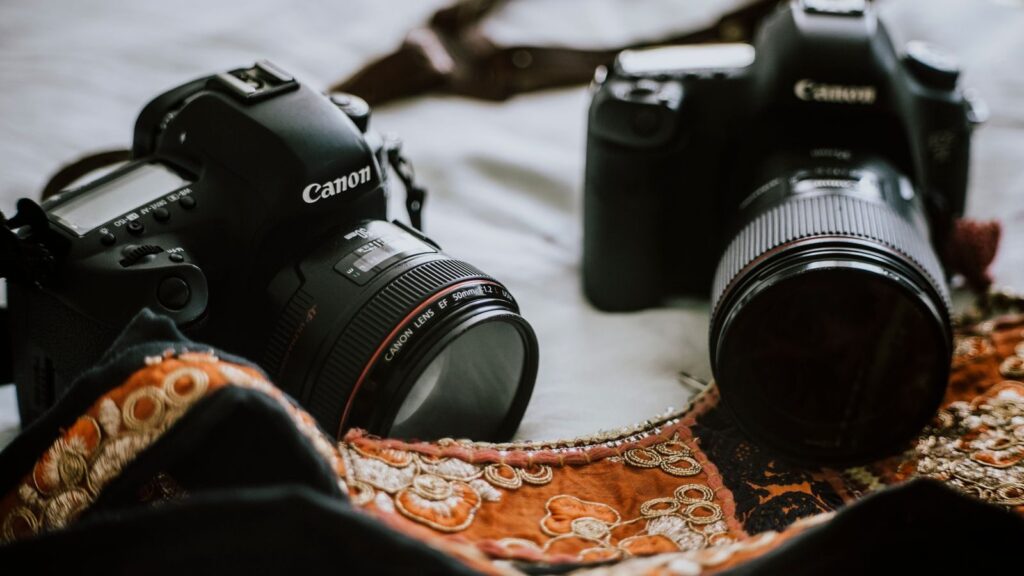
Artificial intelligence can now generate remarkably convincing photographs of people who never existed.
With a simple text prompt, software can create portraits with realistic lighting, natural-looking skin and convincing expressions. At first glance, many are indistinguishable from photographs made with a camera.
As these images become increasingly common, discussions about AI tend to focus on technology. Can people tell the difference? Should generated images be labelled? Will AI replace photographers?
Those are important questions, but they overlook something more fundamental.
Photography has never been valuable simply because it produces attractive pictures. At its best, it records an encounter between real people. More importantly, it reveals something unique about the person standing in front of the camera—something that cannot be generated from a prompt.
A photograph begins with a person
Every genuine portrait starts in the same way.
Someone chooses to stand in front of a camera.
That decision brings uncertainty, personality and spontaneity into the process. The subject may feel confident or nervous. She may laugh unexpectedly, become emotional or gradually relax as trust develops. None of those moments can be predicted in advance.
The photographer responds in turn—adjusting the light, changing direction, waiting for the right expression or abandoning the original idea altogether.
The final image is therefore not simply designed.
It is discovered.
Artificial intelligence works differently.
Instead of responding to a real person, it begins with a desired result and constructs a person capable of producing it. The face, body, expression and environment become variables that can be refined until they perfectly match the prompt.
The process is efficient.
It is also fundamentally different.
Recognising rather than reinventing
The purpose of a thoughtful portrait is not to create a more acceptable version of someone.
It is to recognise what already makes that person distinctive.
Every individual has a combination of expression, movement, posture and personality that belongs only to her. Those qualities rarely fit a universal definition of beauty, and they do not need to. They are often precisely what makes a portrait memorable.
This is where a skilled portrait photographer contributes something artificial intelligence cannot.
Rather than beginning with an ideal face and inventing a person to match it, the photographer begins with a real woman and looks for what makes her compelling. The light, composition and direction are not there to replace her individuality but to reveal it.
Many people arrive convinced they are “not photogenic” because they have spent years comparing themselves with carefully selected—and increasingly synthetic—images. A considered portrait can quietly challenge that belief. Not by pretending they are someone else, but by showing them qualities they had simply never noticed in themselves.
A successful portrait does not ask someone to resemble an ideal.
It reminds her that she never needed to.
Why boudoir photography offers a revealing contrast
Few genres illustrate this difference more clearly than boudoir photography.
Artificial intelligence can imitate its visual language with ease. Soft window light, elegant lingerie, intimate interiors and confident body language can all be generated with extraordinary realism.
What cannot be generated is the experience behind the image.
Authentic boudoir photography depends on trust. The woman being photographed decides how she wishes to be represented, what she is comfortable wearing and where her personal boundaries lie. Throughout the session, she remains an active participant rather than a passive subject.
That collaboration shapes every photograph.
The confidence visible in the final image is not manufactured afterwards. It often emerges gradually through conversation, reassurance and mutual respect.
No image generator can recreate that journey because it never happened.
Why the process matters as much as the picture
When people think about photography, they often focus exclusively on the finished image.
Yet the process itself has value.
A portrait session is a conversation. The subject can pause, change direction, refuse a pose or suggest a different idea. Consent is not a single signature collected before the camera comes out. It continues throughout the experience.
That human interaction affects the photograph in ways viewers may never consciously notice.
Two portraits may appear visually similar.
One may have been generated in seconds.
The other may represent hours of conversation, hesitation, growing confidence and collaboration between two people.
The difference is invisible.
It is also significant.
What human photography preserves
Photography is not automatically truthful or ethical. Real photographers can manipulate images, reinforce stereotypes or misuse people’s trust.
The distinction between photography and AI is therefore not one of virtue.
It is one of participation.
A genuine photograph preserves something synthetic imagery cannot fully reproduce.
It preserves evidence that someone stood in front of the camera.
It preserves an encounter between two people.
It preserves individuality that cannot simply be adjusted until it satisfies a creative brief.
Most importantly, it preserves a moment that genuinely happened.
The image matters not only because of how it looks, but because it belongs to someone’s life.
Choosing reality
Artificial intelligence will undoubtedly become part of the future of visual culture.
It already has legitimate uses in illustration, design and many creative disciplines. The issue is not whether AI should exist. It is whether convenience gradually replaces experiences that only real people can create.
The more convincing synthetic portraits become, the more valuable authentic photography may become.
Not because it is flawless.
Not because it is untouched by editing.
But because every expression, every gesture and every imperfection belongs to someone who genuinely lived that moment.
Perhaps that is what photography has always preserved at its best.
Not perfection.
But individuality.
In an age increasingly populated by synthetic faces, helping someone recognise the beauty that is already her own may become one of the most valuable things a portrait can do.